


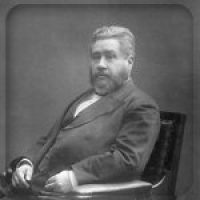
THE IMMUTABILITY OF GOD – Charles Spurgeon
THE IMMUTABILITY OF GOD
“I am the Lord, I change not; therefore you sons of Jacob are not consumed.” Malachi 3:6.
It has been said by someone that “the proper study of mankind is man.” I will not oppose the idea, but I believe it is equally true that the proper study of God’s elect is God. The proper study of a Christian is the Godhead. The highest science, the loftiest speculation, the mightiest philosophy which can ever engage the attention of a child of God is the name, the nature, the person, the work, the doings and the existence of the great God whom he calls his Father. There is something exceedingly improving to the mind in a contemplation of the divinity. It is a subject so vast, that all our thoughts are lost in its immensity—so deep that our pride is drowned in its infinity. Other subjects we can compass and grapple with—in them we feel a kind of self-content and go our way with the thought, “Behold I am wise.” But when we come to this master science, finding that our plumb line cannot sound its depth and that our eagle eye cannot see its height, we turn away with the thoughts that vain man would be wise, but he is like a wild ass’ colt and with the solemn exclamation, “I am but of yesterday and know nothing.” No subject of contemplation will tend more to humble the mind, than thoughts of God. We shall be obliged to feel— “Great God, how infinite are You, What worthless worms are we!” But while the subject humbles the mind it also expands it. He who often thinks of God will have a larger mind than the man who simply plods around this narrow globe. He may be a naturalist, boasting of his ability to dissect a beetle, anatomize a fly, or arrange insects and animals in classes with well-nigh unutterable names. He may be a geologist, able to discourse of the megatherium and the plesiosaurus and all kinds of extinct animals. He may imagine that his science, whatever it is, ennobles and enlarges his mind. I dare say it does, but after all, the most excellent study for expanding the soul is the science of Christ and Him crucified and the knowledge of the Godhead in the glorious Trinity. Nothing will so enlarge the intellect, nothing so magnify the whole soul of man as a devout, earnest, continued investigation of the great subject of the Deity. And while humbling and expanding, this subject is eminently consolatory. Oh, there is, in contemplating Christ, a balm for every wound! In musing on the Father, there is a quietus for every grief and in the influence of the Holy Spirit there is a balsam for every sore. Would you lose your sorrows? Would you drown your cares? Then go plunge yourself in the Godhead’s deepest sea—be lost in His immensity. And you shall come forth as from a couch of rest, refreshed and invigorated. I know nothing which can so comfort the soul, so calm the swelling billows of grief and sorrow—so speak peace to the winds of trial—as a devout musing upon the subject of the Godhead. It is to that subject that I invite you this morning. We shall present you with one view of it—that is the immutability of the glorious Jehovah. “I am,” says my text, “Jehovah,” (for so it should be translated) “I am Jehovah, I change not; therefore you sons of Jacob are not consumed.” There are three things this morning. First of all, an unchanging God. Secondly, the persons who derive benefit from this glorious attribute, “the sons of Jacob.” And thirdly, the benefit they so derive, they “are not consumed.” We address ourselves to these points.
I. THE UNCHANGING GOD
First let us set before us the doctrine of the immutability of God. “I am God, I change not.” Here I shall attempt to expound, or rather to enlarge the thought and then afterwards to bring a few arguments to prove its truth.
God is unchanging in His essence. We cannot tell you what Godhead is. We do not know what substance that is which we call God. It is an existence, it is a being. But what that is we know not. However, whatever it is, we call it His essence and that essence never changes. The substance of mortal things is ever changing. The mountains with their snow-white crowns doff their old diadems in summer, in rivers trickling down their sides, while the storm cloud gives them another coronation. The ocean, with its mighty floods, loses its water when the sunbeams kiss the waves and snatch them in mists to Heaven. Even the sun himself requires fresh fuel from the hand of the infinite Almighty to replenish his ever-burning furnace. All creatures change. Man, especially as to his body, is always undergoing revolution. Very probably there is not a single particle in my body which was in it a few years ago. This frame has been worn away by activity, its atoms have been removed by friction, fresh particles of matter have in the meantime constantly accrued to my body and so it has been replenished—its substance is altered. The fabric of which this world is made is ever passing away like a stream of water—drops are running away and others are following after, keeping the river still full—but always changing in its elements. But God is perpetually the same. He is not composed of any substance or material, but is Spirit—pure, essential and ethereal Spirit—and, therefore, He is immutable. He remains everlastingly the same. There are no furrows on His eternal brow. No age has palsied Him—no years have marked Him with the mementoes of their flight. He sees ages pass, but with Him it is ever now. He is the great I AM—the Great Unchangeable. Mark you, His essence did not undergo a change when it became united with the manhood. When Christ in past years did gird Himself with mortal clay, the essence of His divinity was not changed—flesh did not become God, nor did God become flesh by a real actual change of nature. The two were united in hypostatical union, but the Godhead was still the same. It was the same when He was a babe in the manger, as it was when He stretched the curtains of Heaven—it was the same God that hung upon the Cross and whose blood flowed down in a purple river. The self-same God that holds the world upon His everlasting shoulders and bears in His hands the keys of death and Hell. He never has been changed in His essence, not even by His incarnation—He remains everlastingly, eternally, the one unchanging God, the Father of lights, with whom there is no variableness, neither the shadow of a change.
God changes not in His attributes. Whatever the attributes of God were of old, they are the same now. And of each of them we may sing, As it was in the beginning, is now and ever shall be, world without end, Amen. Was He powerful? Was He the mighty God when He spoke the world out of the womb of non-existence? Was He the omnipotent when He piled the mountains and scooped out the hollow places for the rolling deep? Yes, He was powerful then and His arm is unpalsied now. He is the same giant in His might. The sap of His nourishment is still wet and the strength of His soul stands the same forever. Was He wise when He constituted this mighty globe, when He laid the foundations of the universe? Had He wisdom when He planned the way of our salvation and when, from all eternity, He marked out His awful plans? Yes and He is wise now. He is not less skillful, He has not less knowledge. His eyes which see all things are undimmed. His ears which hear all the cries, sighs, sobs and groans of His people, are not rendered heavy by the years which He has heard their prayers. He is unchanged in His wisdom. He knows as much now as ever—neither more nor less. He has the same consummate skill and the same infinite forecasting. He is unchanged, blessed be His name, in His justice. Just and holy was He in the past—just and holy is He now. He is unchanged in His truth—He has promised and He brings it to pass. He has said it and it shall be done. He varies not in the goodness, generosity and benevolence of His nature. He is not become an almighty tyrant, whereas He was once an almighty Father. His strong love stands like a granite rock unmoved by the hurricanes of our iniquity. And blessed be His dear name, He is unchanged in His love. When He first wrote the covenant, how full His heart was with affection to His people. He knew that His Son must die to ratify the articles of that agreement. He knew right well that He must rend His best Beloved from His heart, and send Him down to earth to bleed and die. He did not hesitate to sign that mighty covenant. Nor did He shun its fulfillment. He loves as much now as He did then. And when suns shall cease to shine and moons to show their feeble light, He still shall love on forever and forever. Take any one attribute of God and I will write semper idem on it (always the same). Take any one thing you can say of God, now, and it may be said not only in the dark past, but in the bright future. It shall always remain the same—“I am Jehovah, I change not”—impressed on His heart it remains.
God changes not in His plans. That man began to build, but was not able to finish and, therefore, he changed his plan—as every wise man would do in such a case—he built upon a smaller foundation and commenced again. But has it ever been said that God began to build but was not able to finish? No. When He has boundless stores at His command and when His own right hand would create worlds as numerous as drops of morning dew, shall He ever stay because He has not power? Or reverse, or alter, or disarrange His plan because He cannot carry it out? “But,” say some, “perhaps God never had a plan.” Do you think God is more foolish than yourself then, sir? Do you go to work without a plan?
“No,” you say, “I have always a scheme.” So has God. Every man has his plan and God has a plan, too. God is a master mind—He arranged everything in His gigantic intellect long before He did it—and once having settled it, mark you, He never alters it. “This shall be done,” says He and the iron hand of destiny marks it down and it is brought to pass. “This is My purpose,” and it stands, nor can earth or Hell alter it. “This is My decree,” says He. Promulgate it angels—rend it down from the gate of Heaven you devils. But you cannot alter the decree. It shall be done. God alters not His plans—why should He? He is almighty, and therefore can perform His pleasure. Why should He? He is the all-wise and, therefore, cannot have planned wrongly. Why should He? He is the everlasting God and, therefore, cannot die before His plan is accomplished. Why should He change? You worthless atoms of existence, ephemera of the day! You creeping insects upon this bay leaf of existence! You may change your plans, but He shall never, never change His.
II. THE PERSONS TO WHOM THIS UNCHANGEABLE GOD IS A BENEFIT
“I am God I change not; therefore you sons of Jacob are not consumed.” Now, who are “the sons of Jacob”? Who can rejoice in an immutable God? First, they are the sons of God’s election. For it is written, “Jacob have I loved and Esau have I hated, the children being not yet born, neither having done good nor evil.” It was written, “The elder shall serve the younger.” “The sons of Jacob— “Are the sons of God’s election, Who through sovereign grace believe; By eternal destination Grace and glory they receive.”
God’s elect are here meant by “the sons of Jacob”—those whom He foreknew and foreordained to everlasting salvation! By “the sons of Jacob” are meant, in the second place, persons who enjoy peculiar rights and titles. Jacob, you know, had no rights by birth, but he soon acquired them. He exchanged a mess of pottage with his brother, Esau, and thus gained the birthright. I do not justify the means. But he did also obtain the blessing and so acquired peculiar rights. By “the sons of Jacob” is meant persons who have peculiar rights and titles. Unto them who believe, He has given the right and power to become sons of God. They have an interest in the blood of Christ. They have a right to “enter in through the gates into the city”— they have a title to eternal honors. They have a promise to everlasting glory. They have a right to call themselves sons of God. Oh, there are peculiar rights and privileges belonging to the “sons of Jacob.”
Next, these “sons of Jacob” were men of peculiar manifestations. Jacob had had peculiar manifestations from his God and thus he was highly honored. Once at night he lay down and slept. He had the hedges for his curtains, the sky for his canopy, a stone for his pillow and the earth for his bed. Oh, then he had a peculiar manifestation. There was a ladder and he saw the angels of God ascending and descending. He thus had a manifestation of Christ Jesus as the ladder which reaches from earth to Heaven—up and down which angels came to bring us mercies. Then what a manifestation there was at Mahanaim when the angels of God met him—and again at Peniel, when He wrestled with God and saw Him face to face. Those were peculiar manifestations—and this passage refers to those who, like Jacob, have had peculiar manifestations. Now then, how many of you have had personal manifestations? “Oh,” you say “that is enthusiasm— that is fanaticism.” Well, it is a blessed enthusiasm, too, for the sons of Jacob have had peculiar manifestations. They have talked with God as a man talks with his friend—they have whispered in the ear of Jehovah. Christ has been with them to sup with them and they with Christ. And the Holy Spirit has shone into their souls with such a mighty radiance that they could not doubt about special manifestations. The “sons of Jacob” are the men who enjoy these manifestations.
Then again, they are men of peculiar trials. Ah, poor Jacob! I should not choose Jacob’s lot if I had not the prospect of Jacob’s blessing. For a hard lot his was. He had to run away from his father’s house to Laban’s—and then that surly old Laban cheated him all the years he was there—cheated him of his wife, cheated him in his wages, cheated him in his flocks and cheated him all through the story. By-andby he had to run away from Laban who pursued him and overtook him. Next came Esau with four hundred men to cut him up root and branch. Then there was a season of prayer and afterwards he wrestled God—and had to go all his life with his thigh out of joint. And a little further on, Rachel, his dearly beloved, died. Then his daughter Dinah is led astray and the sons murder the Shechemites. Then his dear son, Joseph, is sold into Egypt and a famine comes. Then Reuben goes up to his couch and pollutes it— Judah commits incest with his own daughter-in-law and all his sons become a plague to him. At last Benjamin is taken away and the old man, almost broken-hearted, cries, “Joseph is not and Simeon is not and you will take Benjamin away?” Never was man more tried than Jacob—all through the one sin of cheating his brother! All through his life God chastised him. But I believe there are many who can sympathize with dear old Jacob. They have had to pass through trials very much like his. Well, crossbearers, God says, “I change not; therefore you sons of Jacob are not consumed.” Poor tried Souls! You are not consumed because of the unchanging nature of your God. Now do not get to fretting and say, with the self-conceit of misery, “I am the man who has seen affliction.” Why “the Man of Sorrows” was afflicted more than you! Jesus was indeed a mourner. You only see the skirts of the garments of affliction. You never have trials like His. You do not understand what troubles mean. You have hardly sipped the cup of trouble—you have only had a drop or two, but Jesus drunk the dregs. Fear not, says God, “I am the Lord, I change not; therefore you sons of Jacob,” men of peculiar trials, “are not consumed.”
Then one more thought about who are the “sons of Jacob,” for I should like you to find out whether you are “sons of Jacob,” yourselves. They are men of peculiar character. For though there were some things about Jacob’s character which we cannot commend, there are one or two things which God commends. There was Jacob’s faith, by which Jacob had his name written among the mighty worthies who obtained not the promises on earth but shall obtain them in Heaven. Are you men of faith, beloved? Do you know what it is to walk by faith, to live by faith, to get your temporary food by faith, to live on spiritual manna—all by faith? Is faith the rule of your life? If so, you are the “sons of Jacob.” Then Jacob was a man of prayer—a man who wrestled and groaned and prayed. There is a man up yonder who never prayed this morning, before coming up to the House of God. Ah, you poor Heathen, don’t you pray? “No!” he says, “I never thought of such a thing—for years I have not prayed.” Well, I hope you may before you die. Live and die without prayer and you will pray long enough when you get to Hell. There is a woman—she did not pray this morning. She was so busy sending her children to the Sunday school she had no time to pray. No time to pray? Had you time to dress? There is a time for every purpose under Heaven and if you had purposed to pray, you would have prayed. Sons of God cannot live without prayer. They are wrestling Jacobs. They are men in whom the Holy Spirit so works that they can no more live without prayer than I can live without breathing. They must pray. sirs, mark you, if you are living without prayer, you are living without Christ. And dying like that, your portion will be in the lake which burns with fire. God redeem you, God rescue you from such a lot! But you who are “the sons of Jacob,” take comfort, for God is immutable.
III. THE BENEFIT WHICH THESE “SONS OF JACOB” RECEIVE FROM AN UNCHANGING GOD
“Therefore you sons of Jacob are not consumed.” “Consumed?” How? How can man be consumed? Why, there are two ways. We might have been consumed in Hell. If God had been a changing God, the “sons of Jacob” here this morning, might have been consumed in Hell. But for God’s unchanging love I should have been a stick in the fire. But there is a way of being consumed in this world. There is such a thing as being condemned before you die— “condemned already.” There is such a thing as being alive and yet being absolutely dead. We might have been left to our own devices—and then where would we be now? Reveling with the drunkard, blaspheming Almighty God? Oh, had He left you, dearly beloved, had He been a changing God—you had been among the filthiest of the filthy and the vilest of the vile! Cannot you remember in your life seasons similar to those I have felt? I have gone right to the edge of sin—some strong temptation has taken hold of both my arms so that I could not wrestle with it. I have been pushed along, dragged as by an awful Satanic power to the very edge of some horrid precipice. I have looked down, down, down and seen my portion. I quivered on the brink of ruin. I have been horrified, as, with my hair upright, I have thought of the sin I was about to commit—the horrible pit into which I was about to fall! A strong arm has saved me. I have started back and cried, O God, could I have gone so near sin and yet come back again? Could I have walked right up to the furnace and not fallen down, like Nebuchadnezzar’s strong men, devoured by the very heat? Oh, is it possible I should be here this morning, when I think of the sins I have committed and the crimes which have crossed my wicked imagination? Yes, I am here, unconsumed, because the Lord changes not. Oh, if He had changed, we should have been consumed in a dozen ways. If the Lord had changed, you and I should have been consumed by ourselves—for after all, Mr. Self is the worst enemy a Christian has. We would have proved suicides to our own souls. We would have mixed the cup of poison for our own spirits, if the Lord had not been an unchanging God and dashed the cup out of our hands when we were about to drink it. Then we would have been consumed by God, Himself, if He had not been a changeless God. We call God a Father—but there is not a father in this world who would not have killed all his children long ago, so provoked would he have been with them—if he had been half as much troubled as God has been with His family. He has the most troublesome family in the whole world—unbelieving, ungrateful, disobedient, forgetful, rebellious, wandering, murmuring and stiff-necked. Well, it is that He is long-suffering, or else He would have taken not only the rod, but the sword to some of us long ago! But there was nothing in us to love at first, so there cannot be less now. John Newton used to tell a whimsical story and laugh at it, too, of a good woman who said, in order to prove the doctrine of Election—“Ah, sir, the Lord must have loved me before I was born, or else He would not have seen anything in me to love afterwards.” I am sure it is true in my case and true in respect to most of God’s people. For there is little to love in them after they are born. If He had not loved them before, He would have seen no reason to choose them after—but since He loved them without works, He still loves them without works. Since their good works did not win His affection, bad works cannot sever that affection—since their righteousness did not bind His love to them, so their wickedness cannot snap the golden links. He loved them out of pure sovereign grace and He will love them still. But we should have been consumed by the devil and by our enemies—consumed by the world, consumed by our sins, by our trials and in a hundred other ways if God had ever changed! Well, now, time fails us and I can say but little. I have only just cursorily touched on the text. I now hand it to you. May the Lord help you “sons of Jacob” to take home this portion of meat. Digest it well and feed upon it. May the Holy Spirit sweetly apply the glorious things that are written! And may you have “a feast of fat things, of wines on the lees well refined!” Remember God is the same, whatever is removed. Your friends may be disaffected, your ministers may be taken away, everything may change— but God does not. Your brethren may change and cast out your name as vile—but God will still love you! Let your station in life change and your property be gone. Let your whole life be shaken and you become weak and sickly. Let everything flee away—there is one place where change cannot put his finger. There is one name on which mutability can never be written. There is one heart which never can alter. That heart is God’s—that name Love— “Trust Him, He will never deceive you. Though you harshly of Him deem; He will never, never leave you, Nor will let you quite leave Him.”
Charles Spurgeon