


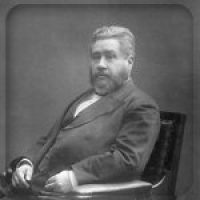
CHRIST SET FORTH AS A PROPITIATION – Charles Spurgeon
Christ Set Forth as a Propitiation
“Christ Jesus whom God has set forth to be a propitiation through faith in His blood.” — Romans 3:25.
We commenced the services in this place by the declaration that here Christ shall be preached. Our brother, who followed us, expressed his joy that Christ was preached herein. He did rejoice, yes, and would rejoice, and our friends must have observed how, throughout the other services, there has been a most blessed admixture not only of the true spirit of Christ but also of pointed and admirable reference to the glories and beauties of His person. This morning, which is the beginning of our more regular and constant ministry, we come again to the same noble theme. Christ Jesus is today to be set forth! You will not charge me for repeating myself—you will not look up to the pulpit, and say, “Pulpits are places of tautology.” You will not reply that you have heard this story so often that you have grown weary of it, for well I know that with you, the person, the character, and the work of Christ are always fresh themes for wonder!
We have seen the sea, some of us, hundreds of times, and what an abiding sameness there is in its deep green surface; but who ever called the sea monotonous? Traveling over it as the mariner does, sometimes by the year together; there is always freshness in the undulation of the waves, the whiteness of the foam of the breaker, the curl of the crested billow, and the frolicsome pursuit of every wave by its long train of brothers. Which of us has ever complained that the sun gave us but little variety—that at morn he yoked the same steeds, and flashed from his chariot the same golden glory, climbed with dull uniformity the summit of the skies, then drove his chariot downward, and bade his flaming coursers steep their burning hooves in the western deep? Who among us has complained of the monotony of the bread that we eat? We eat it today, tomorrow, the next day; we have eaten it for years passed, and though we have other savory matters therewith, yet still the one unvarying food is served upon the table, and the bread remains the staff of life.
Surely I know that as Christ is your food, and your spiritual bread; as Christ is your sun, your heavenly light; as Christ is the sea of love in which your passions swim, and all your joys are found, it is not possible that you as Christian men and women should complain of a monotony in Him. “He is the same yesterday, today, and forever,” and yet He has the dew of His youth. He is the manna in the golden pot which was always the same, but He is the manna which came from heaven, which was every morning new. He is the rod of Moses which was dry, and changed not its shape, but He is also to us the rod of Aaron which buds and blossoms and brings forth almonds.
I come, then, now to preach Christ crucified, as God has set Him forth to be a propitiation for us through faith in His blood. To begin at once, then, we shall notice first, what is meant here by God’s setting forth Christ as a propitiation. Secondly, we shall dwell upon the truth which may very naturally be drawn from the first—Christ the propitiation, as looked upon by the believer. And then, thirdly, putting the two together, I mean inverting the two thoughts, we shall look at Christ as set forth by us, and looked upon by God.
I. What is Meant by God’s Setting Forth Christ as a Propitiation?
The text says of Christ Jesus, “WHOM GOD HAS SET FORTH TO BE A PROPITIATION THROUGH FAITH IN HIS BLOOD.” The words, “set forth,” in the original may signify “foreordained;” but according to eminent critics, it has also in it the idea of setting forth as well as a “foreordaining.” Barnes says, “The word properly means to place in public view; to exhibit in a conspicuous situation, as goods are exhibited or exposed for sale, or as premiums or rewards of victory were exhibited to public view in the games of the Greeks.” So has God the Father set forth, manifested, made conspicuous the person of the Lord Jesus as the propitiation of sin.
How has He done this? He has done it first by ordaining Him in the divine decree as the propitiation of sin. Christ did not take upon Himself the office of High Priest without being chosen thereunto, as was Aaron. As surely as every member of Christ’s body is elect according to the foreknowledge of God; as certainly as in God’s book all His members were written which in continuance were fashioned when as yet there was none of them, so certainly was the Head, Himself, ordained the chosen of God. As our poet puts it:
“Christ is My first elect He said,
Then chose our souls in Christ our Head.”
Perhaps some might say there could be no election where there was no room for choice. But how do we know that there was no room for choice? We can scarcely imagine that angel or archangel could have been set forth as propitiation for sin. Who can tell whether the Almighty mind might not have devised another plan? Who shall dare to limit the Holy One of Israel? At any rate, there was this choice between the Father, the Son, and the Holy Spirit; the divine wisdom conjoined with divine sovereignty, and chose and appointed and determined that Christ Jesus, the second of the Mysterious Three, should be the propitiation for our sins.
When Christ comes into the world, He comes as one of whom all eternity had spoken—He is the child born—born from the womb of destiny; He is the Lamb whom God had appointed from before the foundation of the world. Long before this world was made, or Adam fell, Christ had been set forth; in the volume of the Book, it had been written of Him, “I delight to do Your will, O God.” I think those who are afraid of looking back upon the great decrees of God, because they say they are secrets, have a fear where no fear is appropriate. There is never fear, my brothers and sisters, of our meddling with secret things. If they are secret, it is quite certain that we shall not meddle with them! Only let it be announced once and for all, that they are secret, and there is no one who can betray the secrets of God! But things that are revealed belong to us and to our children; and this is one of the things that is revealed; this is the decree and we will declare it, the Lord said unto Christ, “You are My Son, this day have I begotten You, and He has said unto Him moreover, I will make Him My first-born, higher than the Kings of the earth.”
And all this that He may be the “propitiation for our sins by faith in His blood.”
II. Christ as the Propitiation, as Looked Upon by the Believer
God had set forth Christ to be the propitiation for sins in His promises before the advent. Did He not set Him forth most plainly in the garden where we fell? Was He not plainly revealed afterwards in the ark in which Noah was saved? Did not God speak constantly, not only by verbal promises but by typical promises, which are just as sure and certain as those which are spoken in words? Did He not to a hundred seers and to multitudes of holy men and women, constantly reveal the coming of Him who should bruise the serpent’s head, and deliver His people from the power of the curse?
It is wonderful to see how engaged the Holy Spirit was through every age and era in ordaining types, in bringing forth representations, and symbols in which Christ should be set forth as being the appointed propitiation for sins through faith in His blood! But the great setting forth was the actual doing of the deed when Jesus Christ came forth from the chambers of mystery, and revealed Himself in the manger—when God set Him forth by angelic messengers appointed to be His attendants—set Him forth by the star in the East which should guide the distant strangers to the place where the young child was. He set Him forth afterwards by preserving His life in the midst of imminent perils, fulfilling promises made concerning His infancy in the place where He was hidden from Herod’s fury, and in the spot where He was educated and brought up.
Throughout the life of Christ, how constantly did His Father set Him forth! The voice of God was in the voice of John—“Behold the Lamb of God which takes away the sins of the world.” And on the cross itself, “when it pleased the Father to bruise Him, and put Him to grief,” what an exhibition was there of Christ to the eyes of Jew and Gentile, of prince and peasant, of the learned Greek, of the ruler Roman—that God had appointed Christ to be the full propitiation for sin!
III. Christ as Set Forth by Us, and Looked Upon by God
I think, my dear friends, while we must always regard the cross as being the representation of Christ’s love to His Church, we must also view it as being God setting forth to man the way by which He will accept man, pardon his sin, hear his prayer, and be reconciled with His erring creatures. But, O my dear friends, this is not all; God the Father set forth Christ since then by signs following. What a setting forth that was of Christ the propitiator when the Holy Spirit came down on Pentecost! And what have all conversions been since then? Have they not been repeated seals to the testimony that Christ is the appointed Redeemer of men, and that through Him the faithful are justified and accepted?
You, I trust—many of you—had such a special setting forth of Christ in your own hearts, that you can set your seal to the text before us for Him has God set forth in you as being the propitiation. By effectual grace, your eyes have been opened—by infinite love your stubborn heart has been melted; you have been turned from every other hope and every other refuge; you have seen Christ to be the power of God, and the wisdom of God; compelled by an omnipotent influence which you neither could nor would resist, you have received Him as the Sent of God, have taken Him as being God’s Messiah, and your only refuge. God in you, then, has graciously fulfilled the text, “Him has God set forth to be a propitiation.”
IV. Christ the Mercy Seat and Covering for Sin
But now, to change the subject for a moment, and yet to continue on the same point—what is it that God has so manifestly set forth? We have seen how He has done it—we turn now to what? Sinners, listen, and if you have already accepted that which the Father has revealed, let your joy become full. God has set forth Christ as being the propitiation! The Greek word has it, ilasthrion, which, being translated, may mean a mercy seat or a covering. Now, God has said to the sinner, “Do you desire to meet Me? Would you be no longer My enemy? Would you tell Me your sorrows? Would you receive My blessing? Would you establish commerce between your Creator and your soul? I set forth Christ to you as being the mercy seat, where I can meet with you, and you can meet with Me.”
Or take the word as signifying a covering—as the mercy seat covered the tablets of the law, and so covered that which was the cause of divine ire, because we had broken His commandments. “Would you have anything which can cover your sin? Cover it from Me, your God, so that I need not be provoked to anger? Cover it from you so that you need not be cowed with excessive fear, and tremble to approach Me as you did when I came in thunder and lightning upon Sinai? Would you have a shelter which shall hide altogether your sins and your iniquities? I set it forth to you in the person of My bleeding Son! Trust in His blood and your sin is covered from My eyes—no, it shall be covered from your own eyes, too! And being justified by faith, you shall have peace with God through Jesus Christ your Lord.”
Oh that we may have grace to accept now what God the Father sets forth! The Romish priest sets forth this and that; our own Romish hearts set forth such-and-such-another thing, but God sets forth Christ. “Here will I meet with you. This is the place of My rest—glorious to Me, safe to you—come to Christ! Come to Christ, and you will come to Me.” The Lord Almighty comes to Christ, and there He comes to you. God, then, has set forth Christ Jesus—made Him conspicuous as being the mercy seat, and the great hider of sin!
V. Conclusion
What has He set forth? He has set forth Christ before every one of you, in the daily preaching of the Word, and in this Inspired Book as His anointed to do His work, suffering in the place of all who believe on Him. He has set Him forth as nailed to Calvary’s cross, that your sins might be nailed there; set Him forth as dying, that your sins might die—no, buried that your iniquities might be buried—risen, that you might rise to newness of life; ascended, that you might ascend to God; received in triumph, that you might be received in triumph, too; made to reign, that you might reign in Him; forever loved, forever crowned, that you in Him may be forever loved, and forever crowned, too. Christ has God the Father set forth, that by faith in His blood, your sins being put away, you might enjoy the blessing of complete justification!
“Who is he that condemns, Christ has died, yes, rather, has risen again, and sits at the right hand of God, who also makes intercession for us.” “Who shall lay anything to the charge of God’s elect?” Thus, then, and in these respects, has God the Father set forth Christ.
The Sufficiency of Christ as a Propitiation
Oh, I do not know whether I can put this exactly as I mean it. What I mean is that the devil has often tempted me with, “You have not had a promise sent home to your heart for months; you are no child of God; you cannot get that sweetness out of such-and-such a passage that some men can.” I reply to Satan in this way, “Well, God has never said He has set forth the promise to be a propitiation through faith, but He has set forth Christ, and my soul accepts that which God has set forth, and if ever a promise is applied to me, the promise is mine for all that, and in faith I will lay hold on it, and defy you to rob me of it when my soul has laid hold on Christ.” Oh, that we lived more on Christ and less on anything but Christ—nearer to Christ’s person, more surely resting on Christ’s blood—more simply accepting Him as our all-in-all.
I have not yet done on this second head—a remark or two suggest themselves to me now. God has set forth Christ to be the propitiation through faith in His blood, and we ought to accept Christ as being an all-sufficient propitiation. I believe in Christ today; but if some sin lies upon my conscience and I am worried and troubled about it, ought I not to perceive at once that I have failed to accept Christ as an all-sufficient propitiation? Whether my sin is little or it is great, whether it is fresh or old, it is the same sin, and blessed be God, it has all been atoned for through Christ the propitiation! We ought to take Christ as being the death of every sin and of all sin—as having expunged and wiped out the great debt as well as the little—the 10,000 talents as well as the 100 pence.
We have never gotten the full idea of Christ till we know that every sin of thought, of word, of deed that the believer has ever been guilty of finds its death, its drowning, its total annihilation in the propitiation which God has set forth! Oh, we need to come where Kent was, when he said—
“Now free from sin I walk at large
My Savior’s blood’s my full discharge!
At His dear feet my soul I lay
A sinner saved, and homage pay.”
Well, but when we have come as far as this, we need to add a second thought. God has set forth Christ to be not only an all-sufficient, but an immutable propitiation for sin. Christ is as much my soul’s propitiation when my soul has fallen into sin, as when I have stood firm and resisted temptation, if I am a believer. “That is putting it,” you say, “in a bold and almost Antinomian way.” I cannot help it. It is true—it is true that the propitiation of Christ is never more, never less; it can’t be more, it is complete; it can’t be less, for it is the same yesterday, today, and forever! That man who has been washed in blood is spotless; his doubts and fears have not spoiled his appearance, his powerlessness yesterday in prayer, his despondency a week ago, his all but complete unbelief last month, do not mar the perfection of Jesus’ righteousness—do not take away from the complete achievement of the pardon of his sin by precious blood!
I do believe and hold and rejoice in that precious truth—that our standing before God, when we have believed in Jesus—depends no more upon our frames, and our feelings, than the sun itself in its native glory depends upon the clouds and darkness that are here below. The same—the same in all its splendor, the same undimmed, as full of glory, as full of majesty, the righteousness and blood of Christ abides; and we, standing before God in Him—not in ourselves—are always complete in Him—always accepted in the beloved; never more so, never less so.
“Strong meat this,” says one. Be it strong—nothing short of this will ever satisfy the tried Christian in the hour when sin rolls over his head! If any man can make a bad use of the doctrine of the real substitution of Christ, and the standing of Christ’s people in Christ’s place every day—if any man can make a licentious use of that, his damnation is just; he has no part nor lot in this matter! But I know this—I am not to be restrained from the comfort of a doctrine because some licentious vagabond chooses to destroy his soul with it! Still there stands the glorious truth. And nothing short of this is the full glory of Christ’s atonement—that when once He shed His blood, and when once that blood has been applied to us, by it, and it alone, we stand completely pure and are as pure one day as another day—perfect, complete, accepted, made secure and safe in Christ Jesus the Lord.
“Him has God the Father set forth to be a propitiation for sin.” My soul accepts Him today as it did yesterday, and knows that the sin is put away forever.
III. Our Duty: Setting Forth Christ for God to Look Upon
Now, I shall come to my third and last point. Turn the thoughts over. We have said, God sets forth Christ, and we looked at Him. Now, as a matter of duty and privilege, we must set forth Christ, and God will look at Him. The preacher, standing here as he does today before this immense assembly, knows that without God’s looking upon the ministry, it will be vain and void. How shall God’s eyes be secured? How shall His presence be guaranteed? If in this pulpit Christ is set forth, God will look down upon that Christ set forth, and honor and bless the Word.
Brothers and sisters, I might preach clear doctrine, but God might never look down upon doctrine; for I could point you to churches with tears in my eyes, because I am able to do so, where conversions are rare things. The doctrine is high, high enough—perhaps so high as to have become putrid. I will not say that, but I do know some churches where there has not been an addition to the church by the stretch of ten or a dozen years together, and I have known the reason. Christ was not set forth, and therefore, God did not look down on what was set forth!
I have known, too, churches—and with equal sorrow do I mention them—where practice has been preached, but not Christ. People have been exhorted to do 10,000 things; moral duties presented before the people in pleasing and well-polished essays have taken the place of the cross of Christ, and there have been no conversions! By degrees, the attendance has become very slender—for Christ is not preached. It is a strange thing—there are some exceptions to the rule, but still the rule is there even where there are not many to listen. Only preach Socinianism, and what a splendid hunting-ground this tabernacle will be for the spiders! Give up Christ, and preach philosophy—you need not have an organ, and a skillful person to play the people out of the church—they would never need that. They will never come in!
So it is. Those flimsy doctrines never can prevail because no one will listen to them—they are not attractive. They look as if they would attract all—but none can receive them; the secret being that God will not look down on any man’s ministry unless that man sets forth what God sets forth—Christ Jesus as the propitiation of our sins!
It is not a question as to whether there will be conversions when Christ is set forth; that is certain. Some good brothers quote the text, “Paul may plant, and Apollos may water, but”—and they are a long while upon the “but,” and they pervert the text a little, “but God gives the increase.” Now, the text does not say any such thing! It says, “Paul plants and Apollos waters, God gives the increase.” They are all linked together—Paul does not plant in vain; Apollos does not water in vain—God gives the increase! He is sure to do it, and if there are not souls saved, there is always some reason for it; and the reason to which I would look—leaving now the inscrutable sovereignty of God out of the question for a moment—the reason would be either that Christ is not preached, or else He is preached in such a way as He never ought to be preached—with cold-heartedness, with lack of zeal, with want of tenderness!
Only let Christ be preached by an earnest heart, though there be no eloquence or though the elocution is defective—Christ being set forth, God the Holy Spirit will come forth, and the Word must and will be blessed! His Word shall not return unto Him void. It shall prosper where He has sent it.
Setting Forth Christ in Our Pleas for Souls
But again, as in the ministry we must set forth Christ if we would have God’s smile, so you, my brothers and sisters, in your pleadings for the souls of men, must set forth Christ. What a mass of wickedness is hereabouts. What tens of thousands in this immediate neighborhood who know nothing of God! Here is a city with nearly three million inhabitants; it is not a city, but an empire in itself. What shall we do when we are on our knees? I confess I have sometimes found myself utterly unable to express my desires in prayer to God for this city. When you once get a notion of its sin, its infamy, its dens, its innumerable missionaries teaching Satanic doctrines, its multitudes of men and women whose likelihood it is to ensnare the simple ones, it is an awful burden to carry before God! You cannot pray for London except in sighs and groans!
Good old Roby Flockhart, who stood for many years in the streets of Edinburgh, used to be much laughed at, but he preached every night in the week, and had during the winter months a little lantern which he put upon a stick, and then stood in a corner and preached to the passers-by. He preached with great power, but much eccentricity. That good man was eminent in his prayers when alone. A gentleman who was extremely poor, told me that he went one night to see poor Robert; the candle had been blown out, and he stumbled his way up two or three pairs of stairs and came at last to Flockhart’s room; he opened the door and he could not see the good old man, but he could hear him say, “O Lord, dinna forget Edinboro, dinna forget Edinboro, turn not away Your hand from auld Reekie, dinna forget her, Lord! Your servant will never give You rest till You pour out Your spirit upon Edinboro.” My friend stood still, and there was that old man alone with his God—my friend had never heard such groaning and crying—it seemed as if he could even hear the falling of his tears while he prayed for God to bless Edinburgh, and to pour out His Spirit upon that city.
He made some noise, and the old man said, “There is somebody there I suppose.” He struck a light and found he had taken one of the pillows of his bed to kneel upon by the side of an old chair which was about the only furniture, with the exception of the bed. He would pray for Edinburgh by the hour together, and then go out to preach, though many laughed at and hooted him.
Oh, one wants to feel like that for London, too, kneeling there till one’s knees are sore, crying, “Do not forget London, do not forget London! Lord, do not turn Your face from London! Make bare Your arm in this great city.” But how are we to make our prayers prevail with God? Brothers and sisters, we must show forth Christ in prayer, and then God will look upon our prayers! The Methodist cry which was once heard at the prayer meeting when a poor Methodist brother could not go on, and someone at the far end of the chapel cried out, “Plead the blood, brother, plead the blood”—that old Methodist cry has force and power in it! “Plead the blood.” God can’t, can’t, can’t resist the cry of the blood of Christ! Abel’s blood demanded vengeance, and it had it. Christ’s blood demands pardons, and shall have it, must have it—our God cannot be deaf to the cry of His own Son’s blood! And if you and I, and all of us together can plead the precious blood of Christ for London, a revival must come, will come, shall come, and the face of the times shall be changed! God’s arm shall be revealed, and “All flesh shall see it together, for the mouth of the Lord has spoken it.”
Personal Plea for Salvation
Yet, once again, and here with affectionate earnestness—I come to plead personally with each of you. Soul, are you this morning sick of self, and longing to be saved? Do your sins condemn you? Do the lusts accuse you; does your conscience flog you? Have you been to God in prayer? Have you sought for mercy, and has no mercy come? Have you read the Bible to find a promise? Has no promise dropped with honey to you? Come, I pray you, and obey the Word of God which I utter in your hearing—come and take CHRIST, and show Christ’s blood to God, and He will, He must smile upon you! If you cannot take the promise, take the BLOOD! If you cannot come before God with any feelings, come with CHRIST in your hands!
“May I trust Christ?” asks one. May you?! You are commanded to do it! He who believes not has made God a liar because he believes not! He who believes has set to his seal that God is true! Sinner, God is satisfied with Christ; does He satisfy God, and will He not satisfy you? The eternal judge has accepted Jesus, and do you refuse Him? The Lord has opened the door, and stands at it.
Is the door good enough for the king, and yet not good enough for a rebel like yourself? “But.” Away with your “buts!” You want to bring something to add to Christ—is He enough to reconcile God, and not enough to reconcile you? “But, but,” again. So God thinks the precious blood to be a sufficient price, and you think it is not? Oh, fool, and slow of heart, how dare you think that God has not set forth enough, but you must add to it!
Instead of this, I pray you in Christ’s stead; believe in Christ as you are! Whoever you may be, whatever your past life has been, whatever your present feelings are—entrust your soul with Christ, and God declares that your sins are put away! Put your soul as it is—I care not how black with sin, it matters not how depraved it is—put it here on that mercy seat which God has set forth, and you have put it where God commanded you put it, and its salvation rests no more with you. You have put your salvation into Christ’s hands, it is His business to save you, and He will do it—
“I know that safe with Him remains
Protected by His power
What I’ve committed to His hands
Till the decisive hour.”
I do not know how it is, but this simple doctrine is the hardest doctrine to make clear.
It seems so easy, and yet many will mystify and doubt it. “What, no good works, no good feelings?” All these things are fruits of grace—but salvation does not depend upon good works—they are a result of salvation. Salvation is in Christ, wholly in Christ—in Christ alone—and the moment any of you trust Him genuinely to be your sole and only Savior, you have accepted God’s propitiation, and God has accepted you. It is not possible for the Lord, unless He could reverse His nature, to stain His honor, belie His character, make His word a farce, and the atonement of Christ a falsehood—to reject any man under heaven who believes in Christ, and takes Him to be His all-in-all!
This day is called Good Friday—may it be a good Friday to some of you! Perhaps I have some here to whom I have preached these last seven years, and yet you have remained unsaved. I am clear of your blood if you had only heard but this one morning sermon, for God witnesses, I know not how to put the plan of salvation more clearly than I have done! “God has set forth Christ to be a propitiation through His blood.” I bid you look to Christ bleeding, to Christ sweating drops of blood, Christ scourged, Christ nailed to the cross, and if you believe in Christ’s blood, He is the propitiation of your sins. But I can do no more than this; it is mine to preach, it is mine to pray, and mine to plead. Oh, may God the Holy Spirit give you grace to receive, to accept, to yield to this blessed proclamation of free mercy! Other salvation there is none. You may rack your soul with pain, and wear out your bones with toil, but there is rest nowhere but here, “Believe on the Lord Jesus Christ, and you shall be saved.” “He who with his heart believes, and with his mouth makes confession, shall be saved.” “For he who believes and is baptized shall be saved, but he who believes not shall be damned.” What shall I say? Instead of pleading further with you, I would plead with God in private that many of you may now try whether Christ cannot save you. Rest yourself on Him, trust yourself with Him, and He will be as good as His word, and save you now, and save you even to the end. The Lord add His blessing, for Jesus’ sake. Amen.